From the LT – The Hague is talking about hybrid heat pumps. We’re already making them.
A hundred homes in Dalen, all served by one local substation. A guarantee that the Xtend will pay for itself within seven years. A heating system that flags up problems before the mechanic sets off. And an Intergas boiler keeping a world-class sprinter warm at home. Louis Visser brings us up to date.
In early October, the NOS reported on the Dutch government’s plans for hybrid heat pumps. From 2029, it wants smart hybrid systems fitted in many homes when their boilers are replaced.
The objections came straight away. Too expensive. Will they ever pay for themselves? The government is now looking into those concerns.
Hybrid heating. Intergas through and through.
You might think a hybrid system means getting rid of the boiler. It doesn’t. A hybrid combines a heat pump with a boiler, and at Intergas, both come from Coevorden.
You make the boiler, the indoor unit and the controls that decide which heat source to use and when. The government wants many more of these systems in homes from 2029. We’re already making them. We’re already building them.
Seven years. A promise we stand by.
Our new performance guarantee comes with a clear promise: the Xtend will pay for itself within seven years. If it doesn’t, Intergas will pay the difference.
There are conditions, as with any guarantee. But the promise stands.
We can make that promise because we know how good our products are. And you’re the people who make them.
100 homes. One substation. No roadworks.
One in three streets in the Netherlands will need to be dug up to lay higher-capacity power cables. Otherwise, the grid won’t be able to cope with all the heat pumps and electric cars in the years ahead.
We thought there had to be a smarter way.
In Dalen, we installed 100 hybrid heat pumps, all served by the same local substation, and monitored them for two winters. The grid coped just fine. Smart controls even reduced the evening peak in electricity demand, and very few residents chose to turn those controls off.
That’s the advantage of a hybrid system. When the electricity grid is under strain, the boiler can step in for a while. That can avoid the need to dig up the street.
You’ll find the full story in the white paper on our website. It’s well worth a read.
Putting the lessons from Dalen into the Xtend.
We’re now building those lessons into the Xtend, so it can run mainly when electricity is cheaper or the sun is shining, and let the boiler take over when that makes more sense.
Our development team is hard at work on it.
A heating system that calls for help.
Imagine your car calling the garage: “One of my tyres is losing pressure. You’d better order a replacement.”
That’s the idea behind our new service dashboard. It knows how much heat a system should produce for the gas or electricity it uses. If the system is underperforming, the engineer can see that before even getting into the van.
That means less time tracking down faults, fewer visits and the right part in the van first time. Skilled heating engineers are in short supply, so every unnecessary journey we can avoid counts.
Lieke Klaver chooses Intergas.
After winning bronze at the World Championships, Lieke Klaver told Trouw how pleased she was with her new Intergas boiler. Now she’s the face of our latest campaign.
A world-class sprinter, kept warm at home by a boiler you helped build here in Coevorden.
Meanwhile, the boilers keep rolling out.
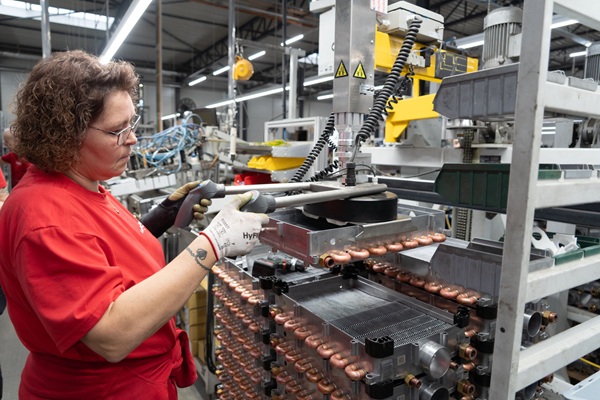
Winter’s on its way, and everyone wants an Intergas. Every boiler that leaves the production line will soon be keeping a family warm.
That takes everyone working together, from purchasing and production to planning, service, design and sales.
Thank you for everything you do.
This is just the beginning.
There’s more in store. I can’t say much yet, but there’s plenty to look forward to. Keep an eye on De Wisselaar.
And next time someone at a birthday party asks where you work, say it with pride:
“In The Hague, they’re talking about hybrid heat pumps. In Coevorden, we’re making them.”
Got a question or an idea? Come and have a chat. My door’s always open.
Louis Visser
Senior Manager Technology & Product Strategy